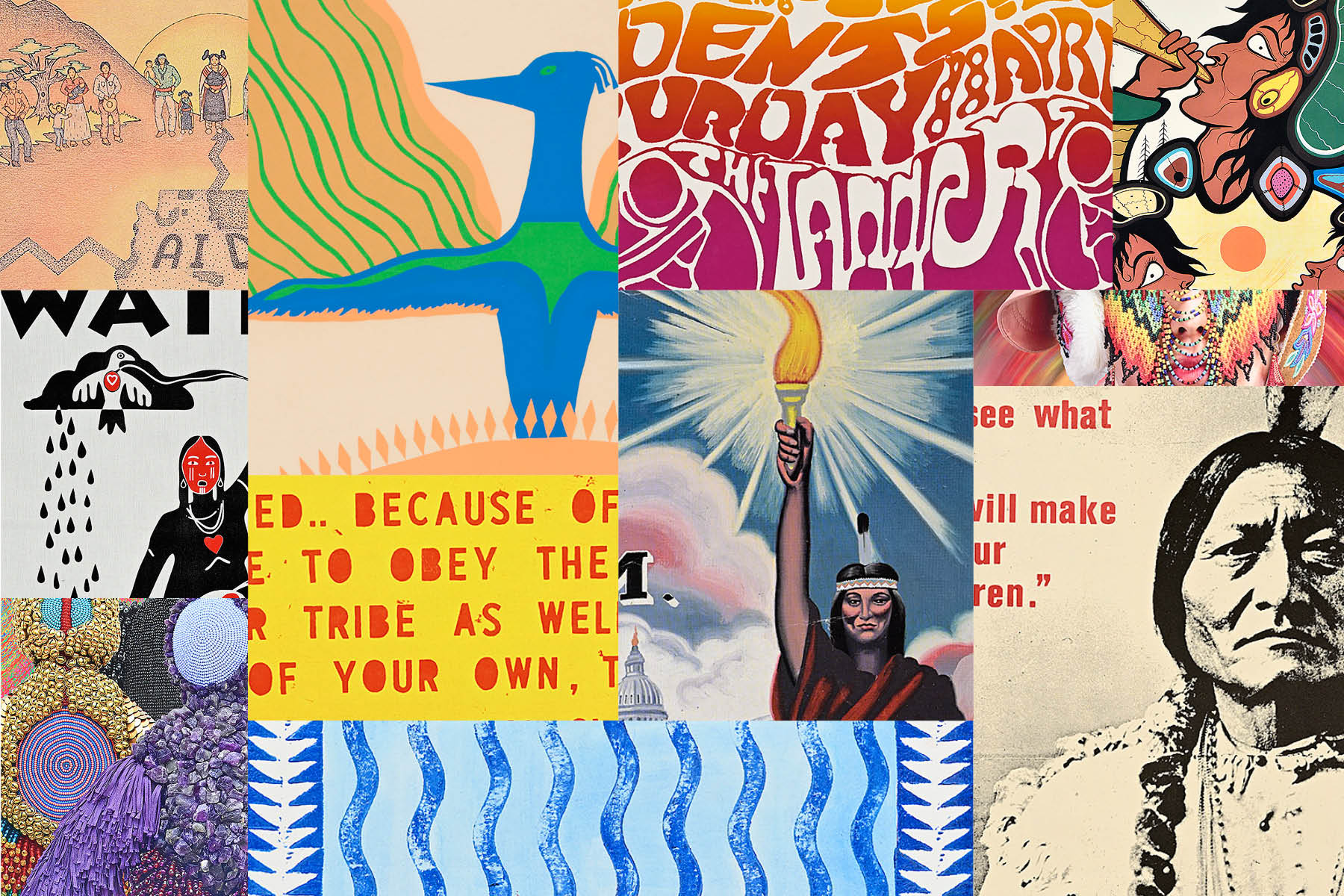
Designed to Be Red
Native American & Indigenous Poster Works
Curated by Brian Johnson (Monacan Indian Nation)
Poster House, NYC
September 25, 2026—February 21, 2027

Brian Johnson is an award-winning designer, curator, and partner at Polymode.
Brian focuses on the production of good design without the expense of sacrificing our humanity or environment. He has guest lectured and hosted workshops at the School of Visual Arts; the Walker Art Center; AIGA’s National Design Conference; his alma mater, the Rhode Island School of Design; and is one of the founders of the online learning platform BIPOC Design History.
As a curator, he is the author of Designed To Be Red: Native American & Indigenous Poster Works, an exhibition and publication scheduled to open September of 2026, at Poster House museum in New York. His recent clients include: The New York Times Magazine, MIT Press, A24, Nike, Airbnb, the Metropolitan Museum of Art, the Art Institute of Chicago, and the Cooper Hewitt Smithsonian Design Museum. Johnson is 2025 Mellon Fellow at the IAIA Research Center for Contemporary Native Arts (RCCNA) and was awarded the 2023-2024 Hyperallergic Emily Hall Tremaine Journalism Fellowship for Curators where he focused on Native-made works to combat erasure and decolonize design.
He is a contributor to Gatherings: New Directions in Indigenous Book History, the forthcoming publication with the University of Pennsylvania Press with his essay “What If The Designer Was Native?”
CV upon request.
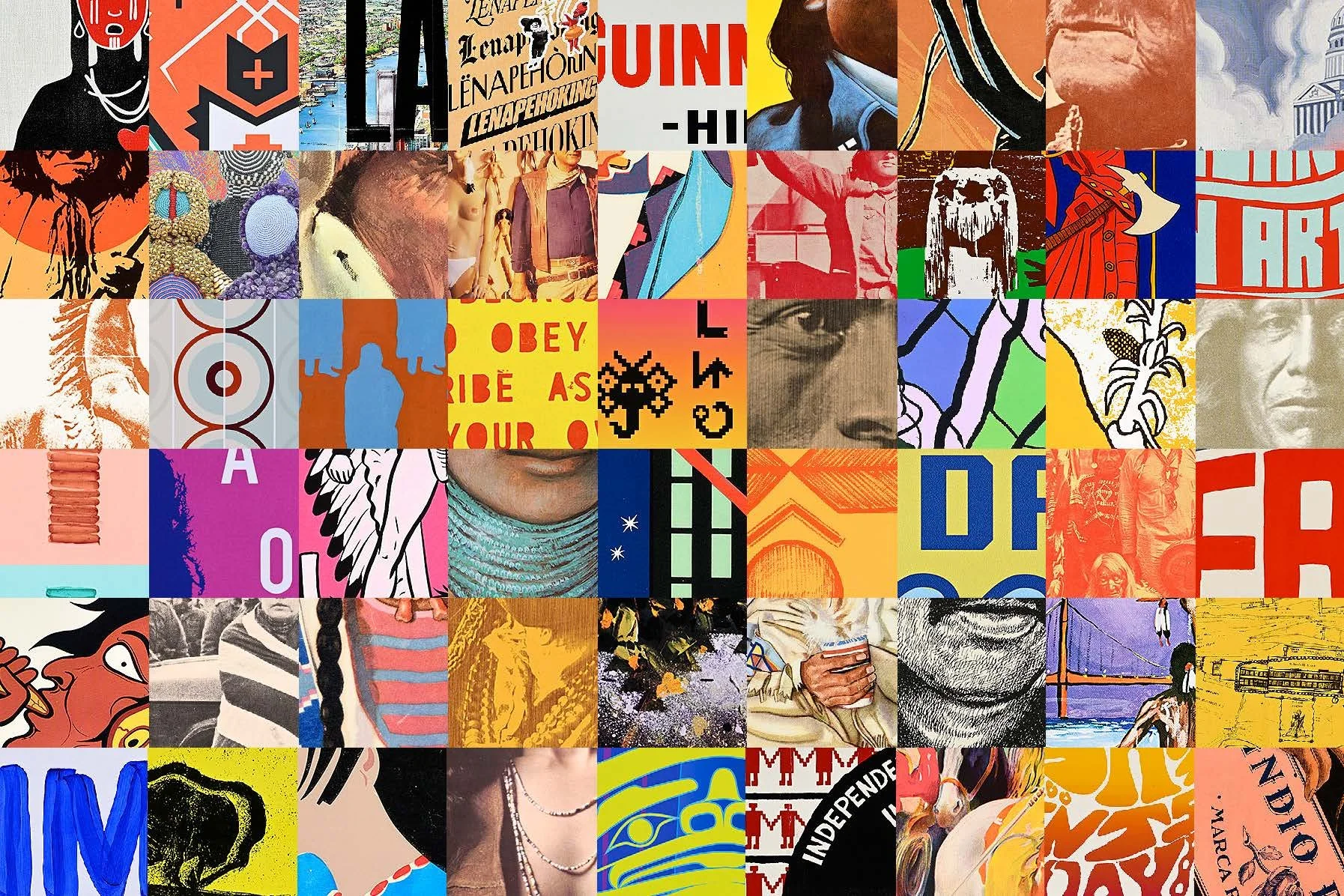
Designed to Be Red
Native American & Indigenous Poster Works
Indigenous peoples have always been designing.
Native designers are not often shown as authors of their own ideas or images, controlling neither how and when their stories are depicted, nor through what channels and mediums. Instead, Indigenous existence has been historically reduced to iconography that supports the American mythos that its numerous and distinct tribes are dead and in the past. Mythmakers and marketing teams have long used graphic design to tell stories about Native Americans, First Nations, Métis, Alaska Natives, and other Indigenous peoples rather than with them, creating reductive, inaccurate, and harmful representations of a living, vibrant, and varied group of people.
Despite this, Native graphic art has a rich history that shows that its practitioners are not merely subjects of design but shapers of it—innovators who have created dynamic, subversive, and optimistic work despite centuries of cultural obliteration, land theft, and socio-economic marginalization. Through examples spanning nearly two centuries and representing over 60 tribes and nations, this exhibition reveals and celebrates design histories that have always existed alongside, despite, and in resistance to dominant colonial narratives, illustrating the full spectrum of Native life.
The exhibition features over 100 works from more than 80 different tribes/nations, capturing the voices of Indigenous artists across nearly 11 centuries.
For more information, go to Poster House’s info page.
-
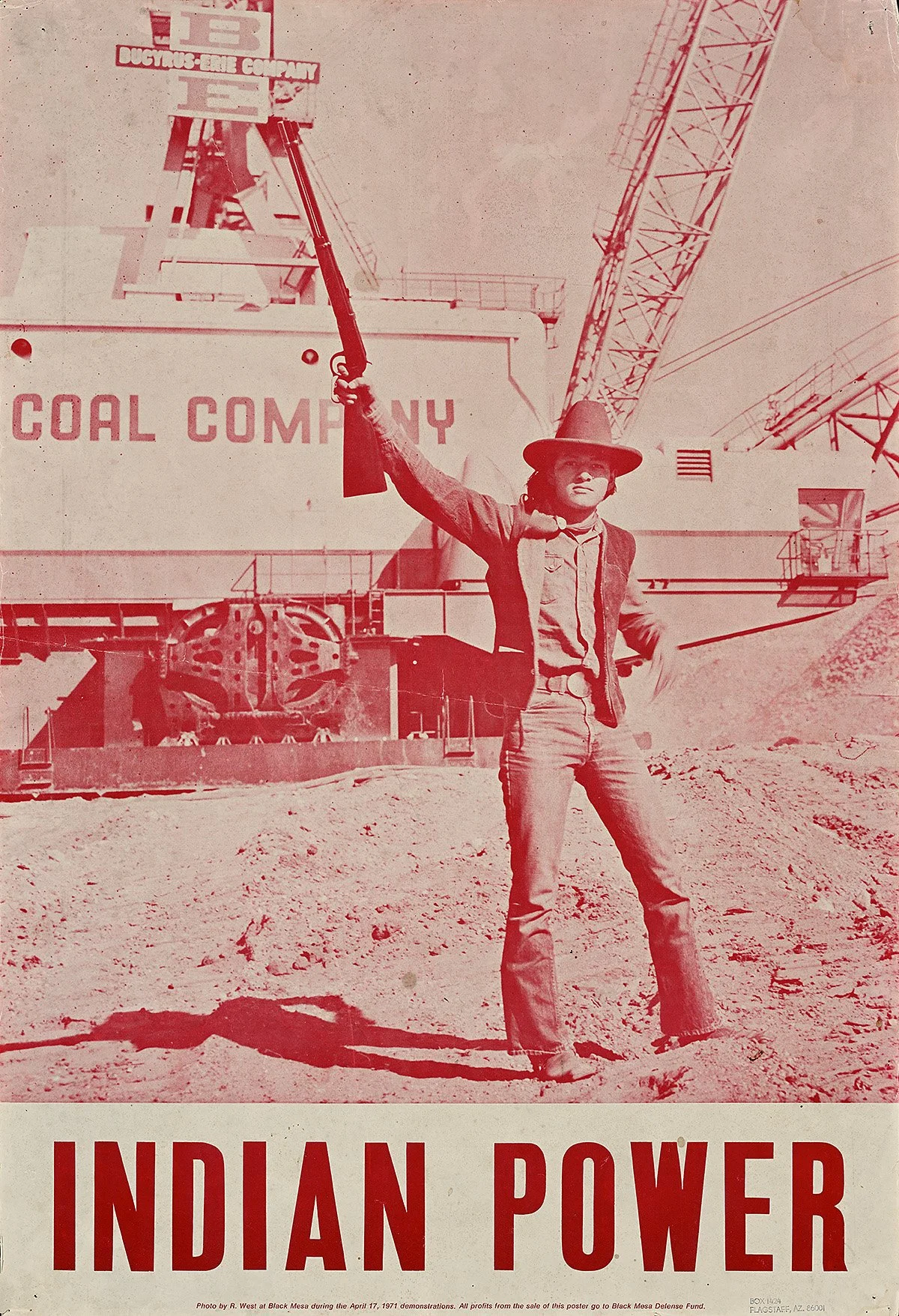
![A person dressed like a cowboy, wearing a hat, sunglasses, and western clothes, standing in a dirt area at a political protest with a raised rifle. In the background, there is a large industrial mining or construction site with a crane and a sign that reads 'Coal Company', and a banner above displaying numbers and text.]()
Indian Power
The Black Mesa Defense Fund, in support of the Hopi and Navajo, 1971
17” x 25” -
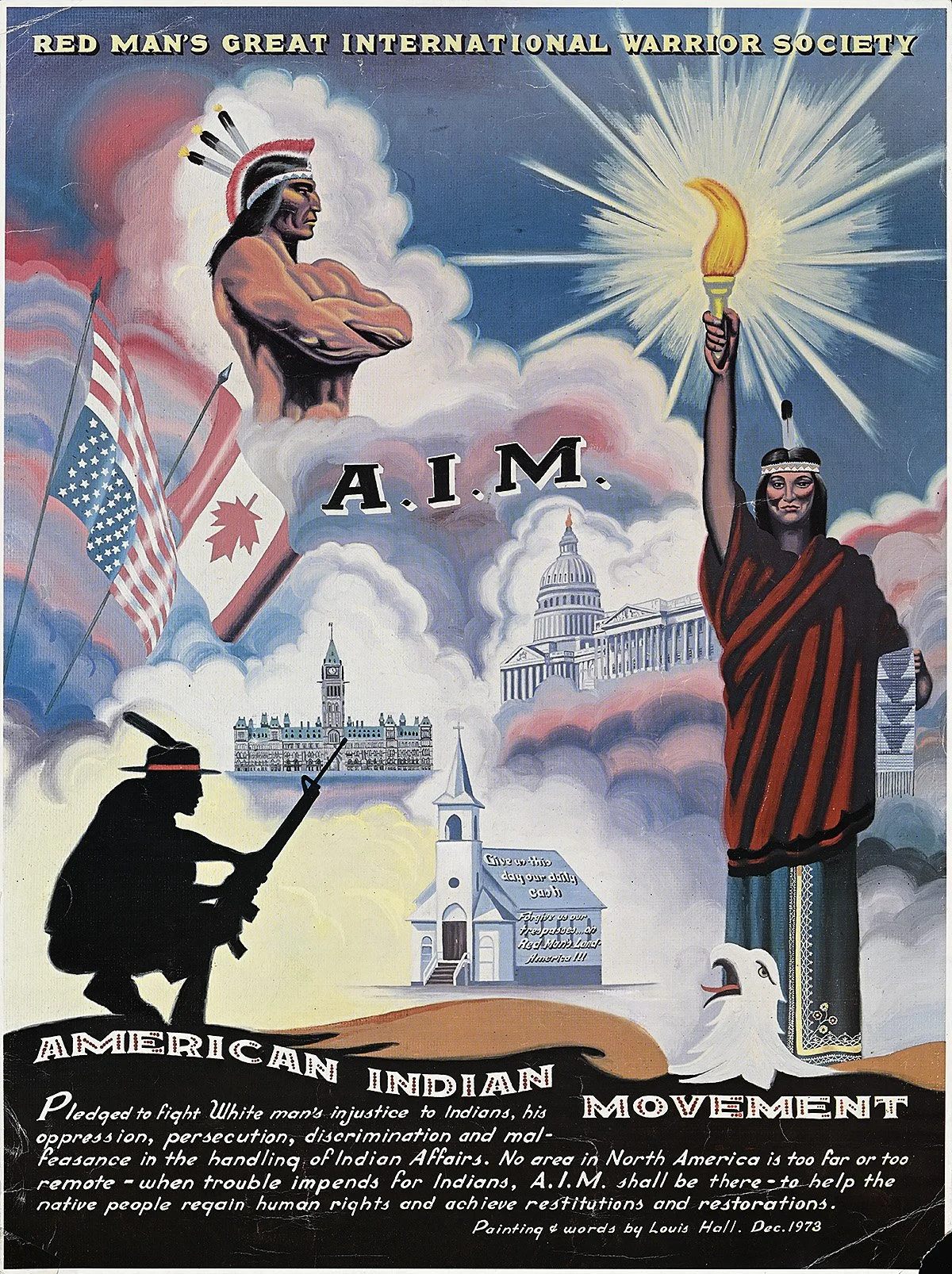
![A theatrical poster showing Native American woman holding a torch, a Native American warrior, and an indigenous man with a rifle, along with American and Canadian flags, the U.S. Capitol, Parliament, and a church, with clouds and a large mental image of a warrior with crossed arms and a headdress. The text references the American Indian Movement and the fight against injustice.]()
American Indian Movement
Louis Karoniaktajeh Hall, Mohawk, 1973
18” × 23 7/8” -
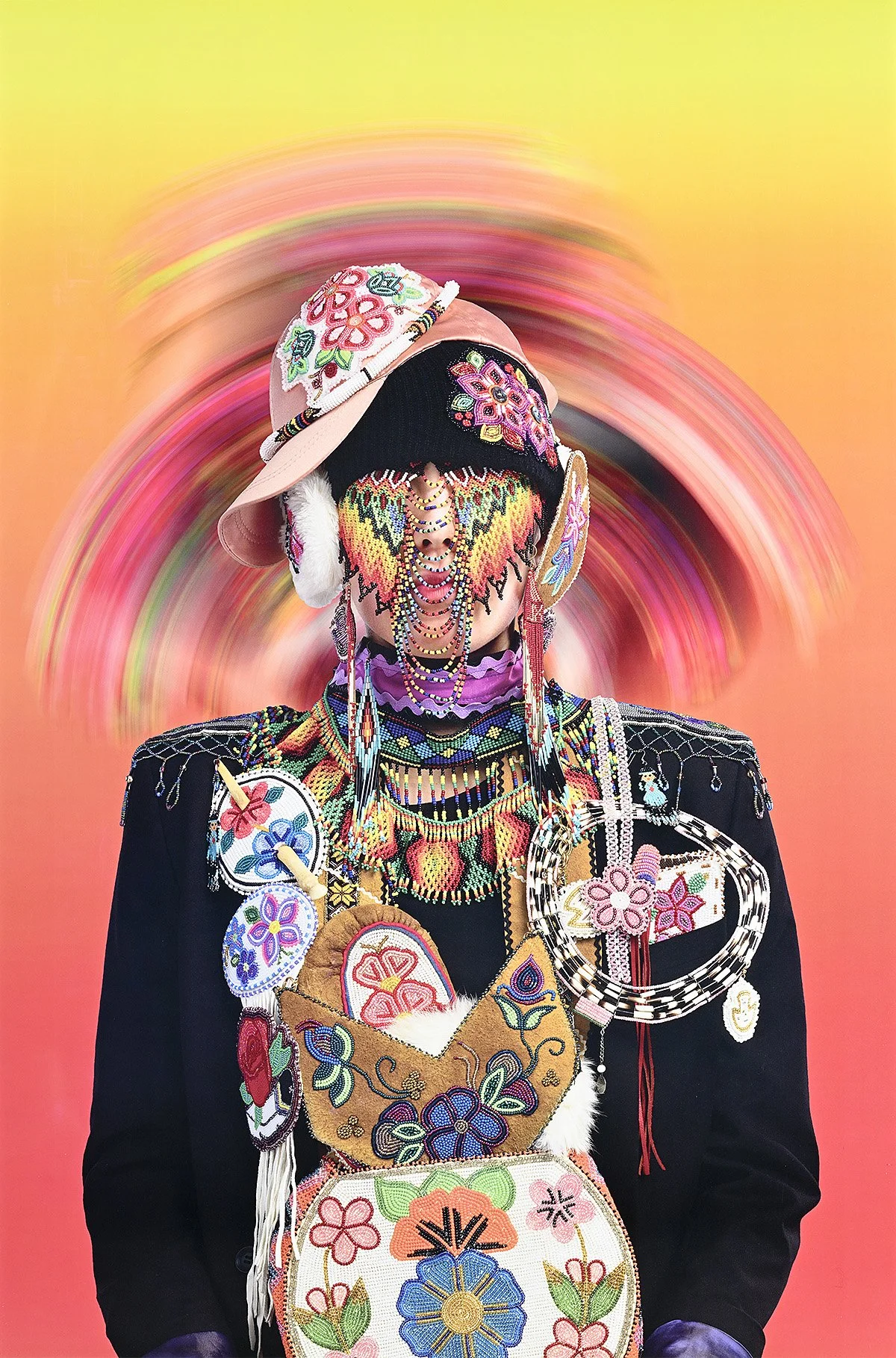
![Person dressed in elaborate, colorful embroidered accessories and garments, with a blurred, swirling pink, orange, and yellow background.]()
Because Once You Enter My House, It Becomes Our House
Jeffrey Gibson (Mississippi Choctaw/Cherokee) and Dana Claxton (Hunkpapa Lakota), 2021
24” x 36” -
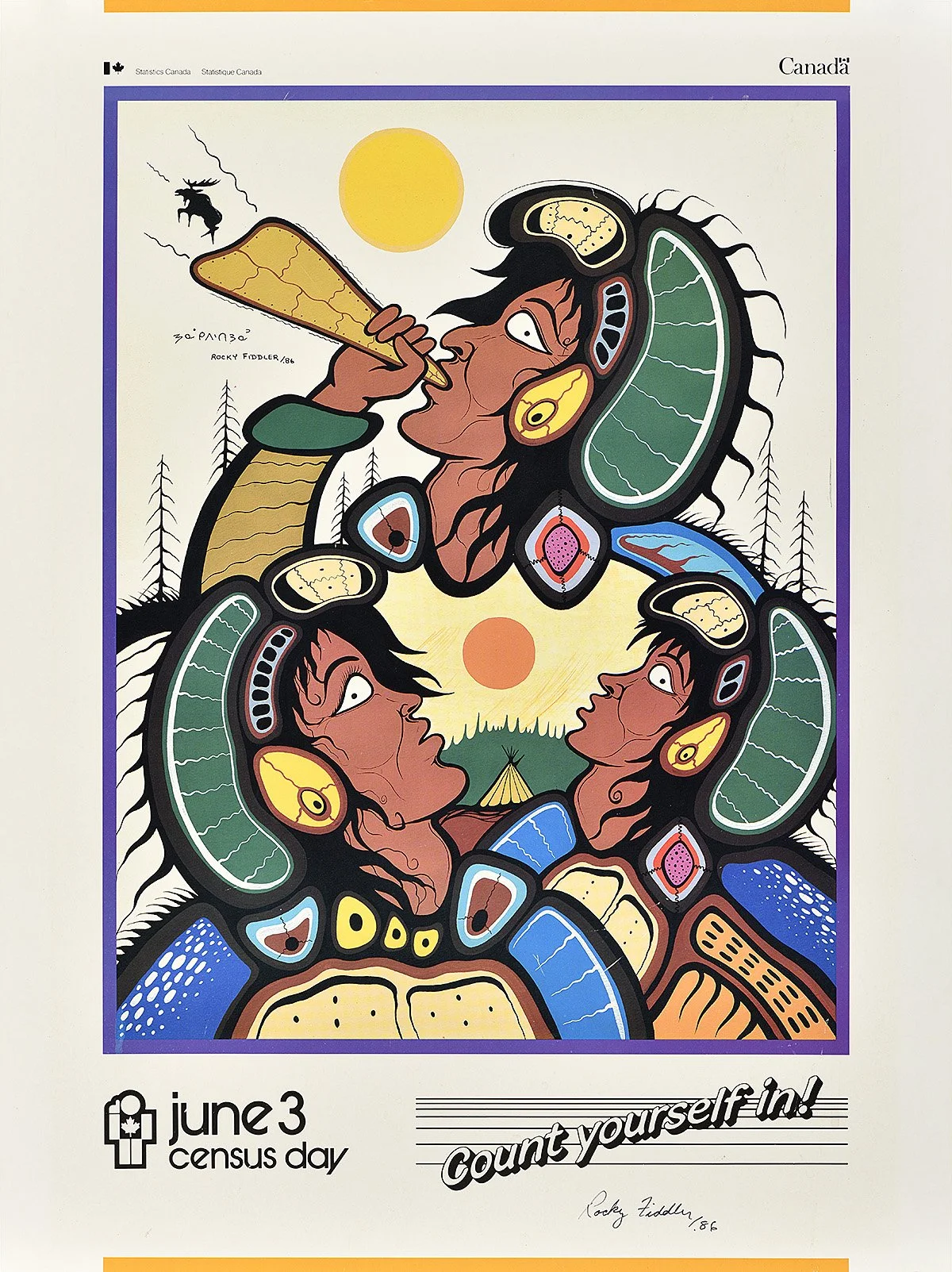
![A colorful indigenous-inspired illustration promoting June 3 Census Day, showing three Native American women with traditional adornments, one blowing into a blowgun, against a natural landscape with trees, a tipi, and two suns or moons in the sky.]()
Count Yourself In!
Rocky Fiddler (Cree), 1986
18” x 24 1/4” -
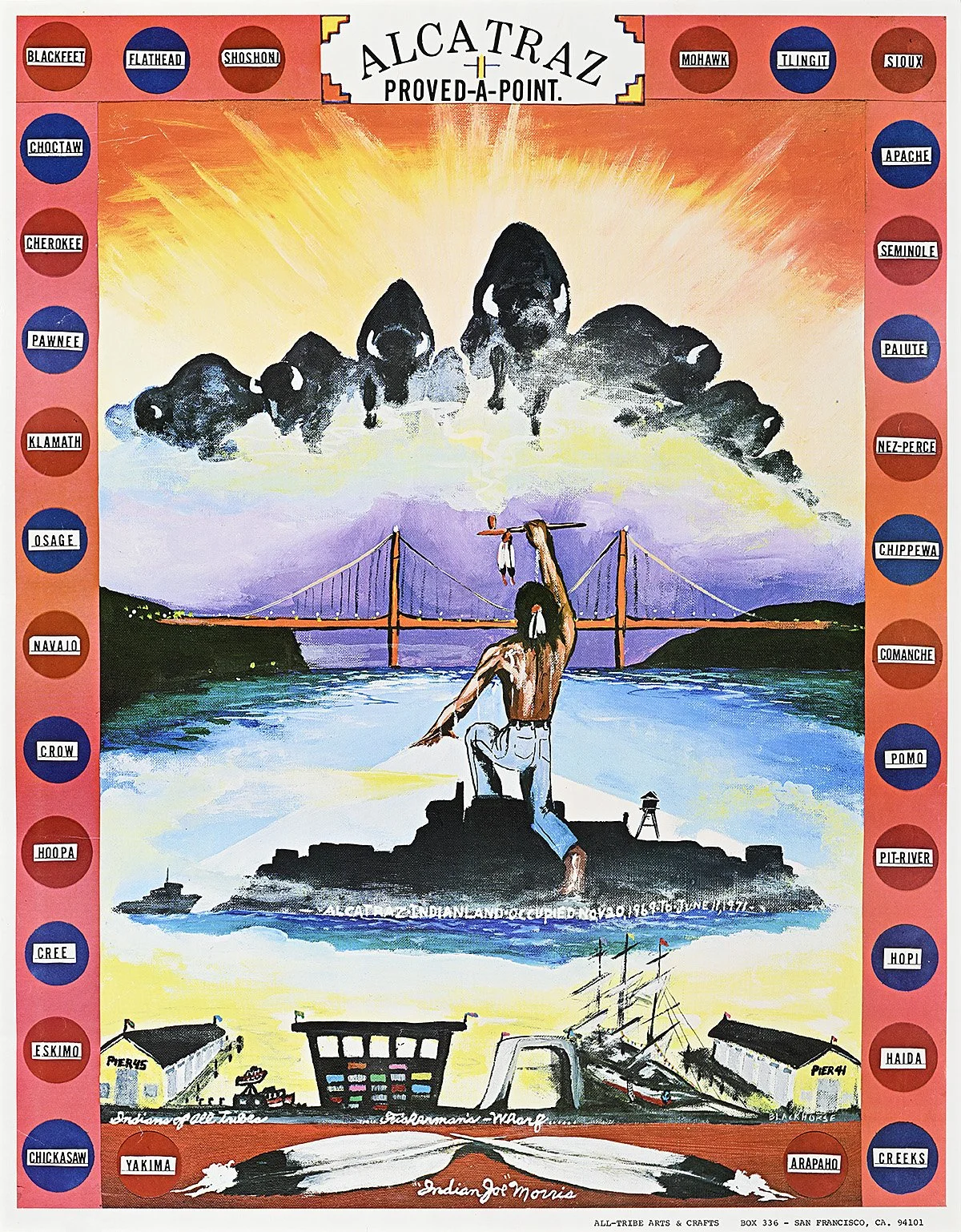
![Illustrated poster of the history and culture of Alcatraz, featuring a large painting of the island, the Golden Gate Bridge, and Native American imagery. Around the border are listed names of various Native American tribes.]()
Alcatraz Proved a Point
Joseph “Indian Joe” Morris (Blackfoot), 1972
17 3/4” x 22 3/4” -
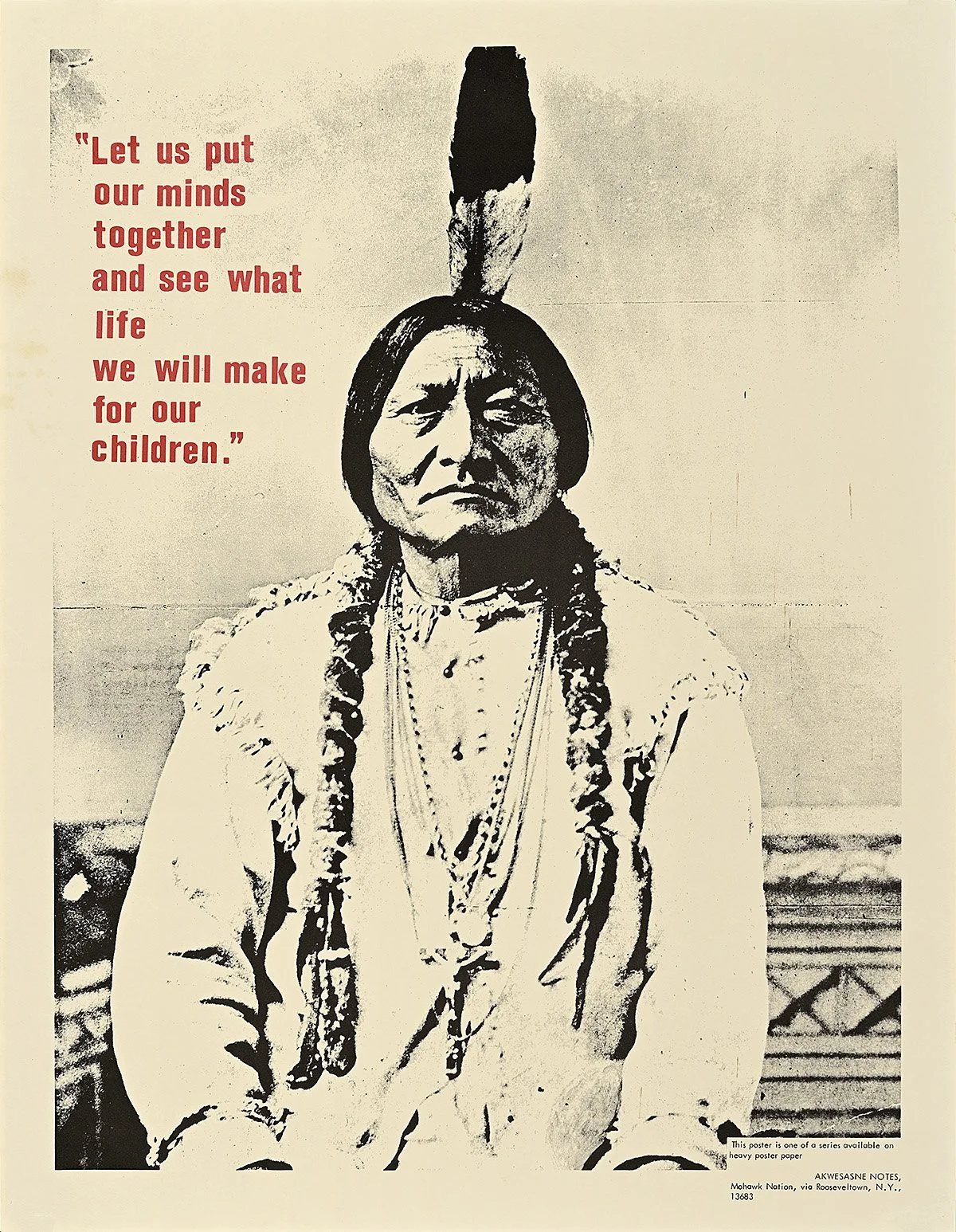
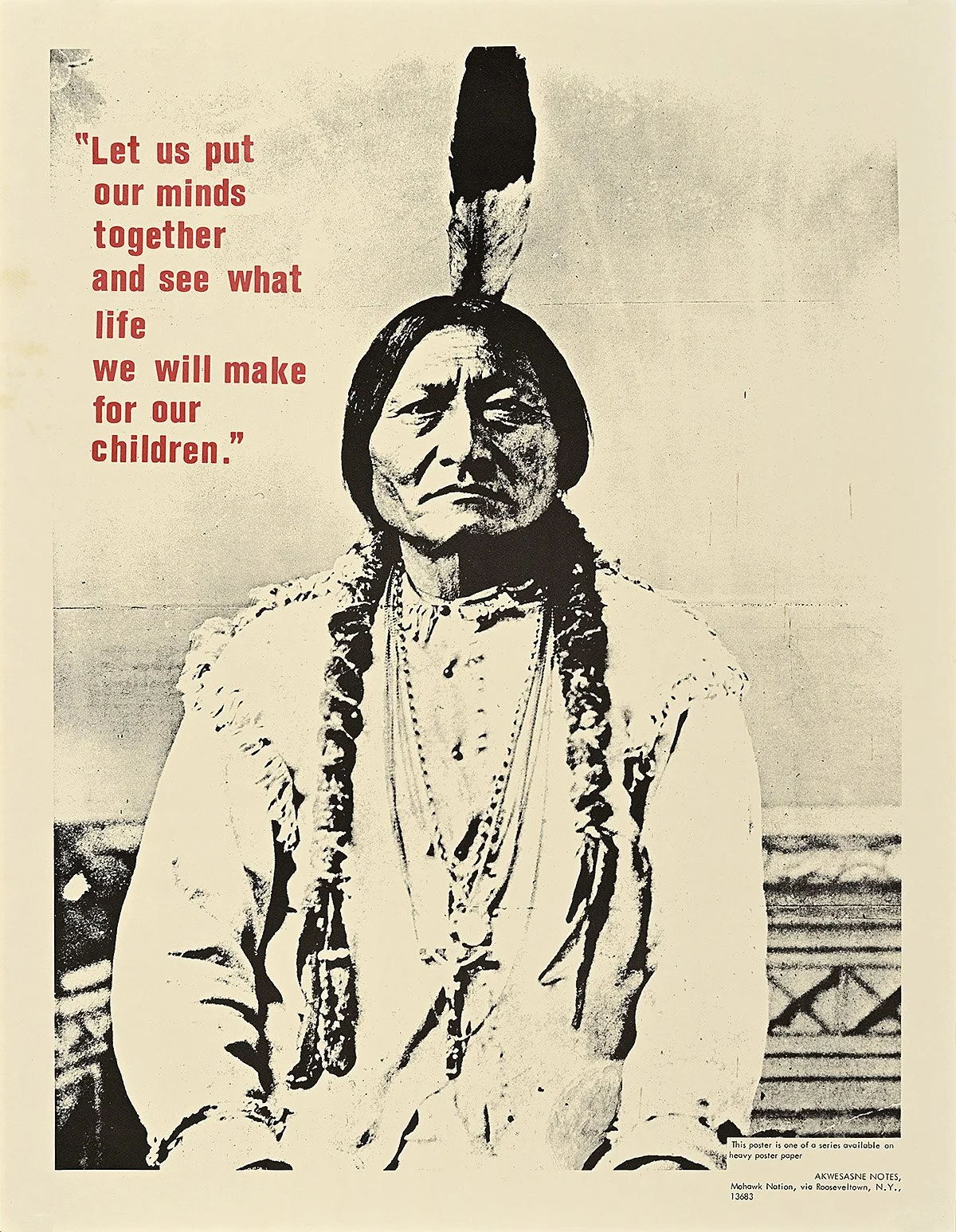
![A vintage poster features a Native American person dressed in traditional attire, with a headdress and beads. There is a quote in red text on the left side that reads, "Let us put our minds together and see what life we will make for our children."]()
Let Us Put Our Minds Together
Akwesasne Notes, Mohawk Nation, 1975
17 1/2” x 22 1/2”
Recent Works & Collaborations
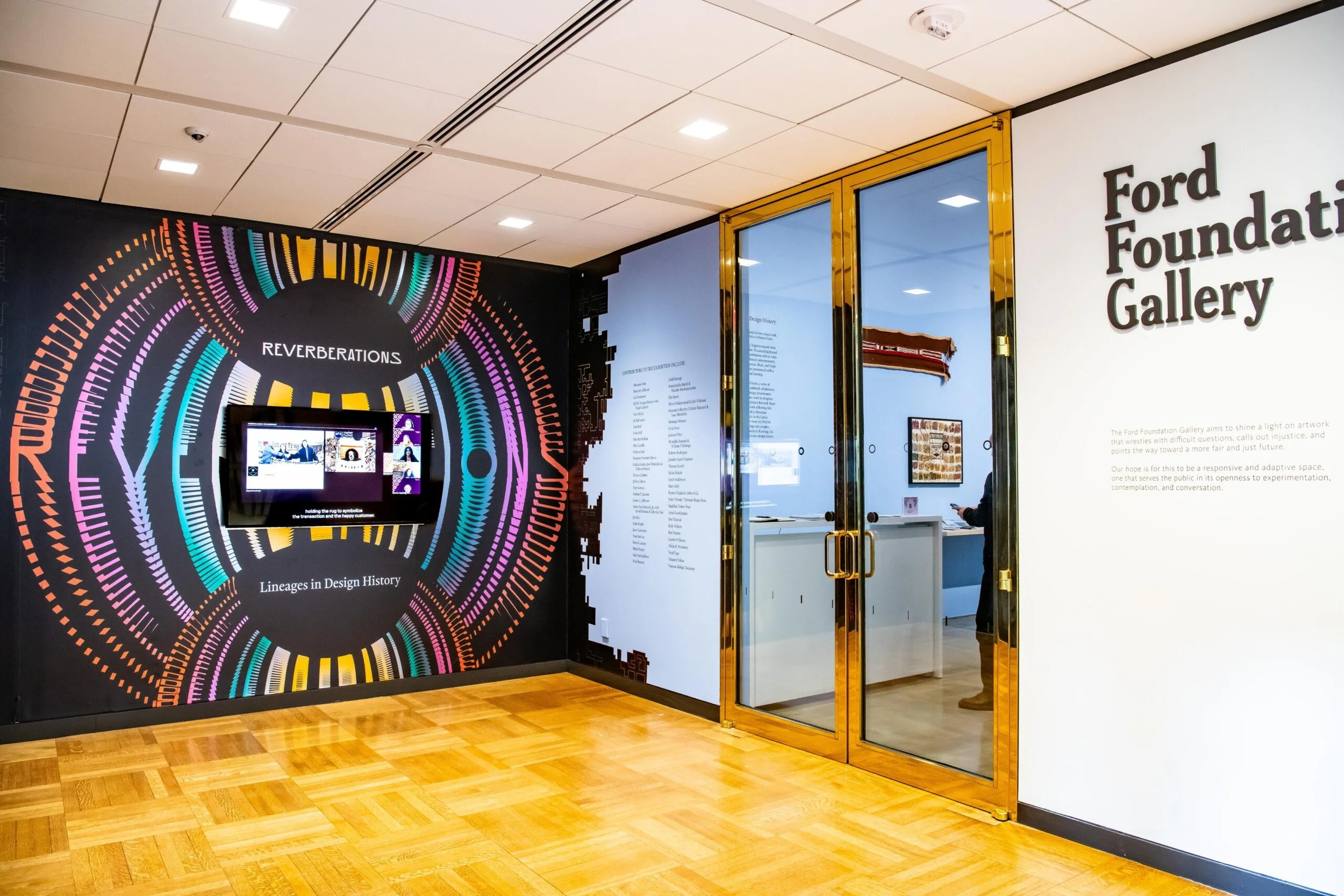
Reverberations: Lineages in Design History transforms the gallery into an expansive educational space, reimagining design history to feature Indigenous, Black, and People of Color designers and cultural figures.
Reverberations: Lineages in Design History
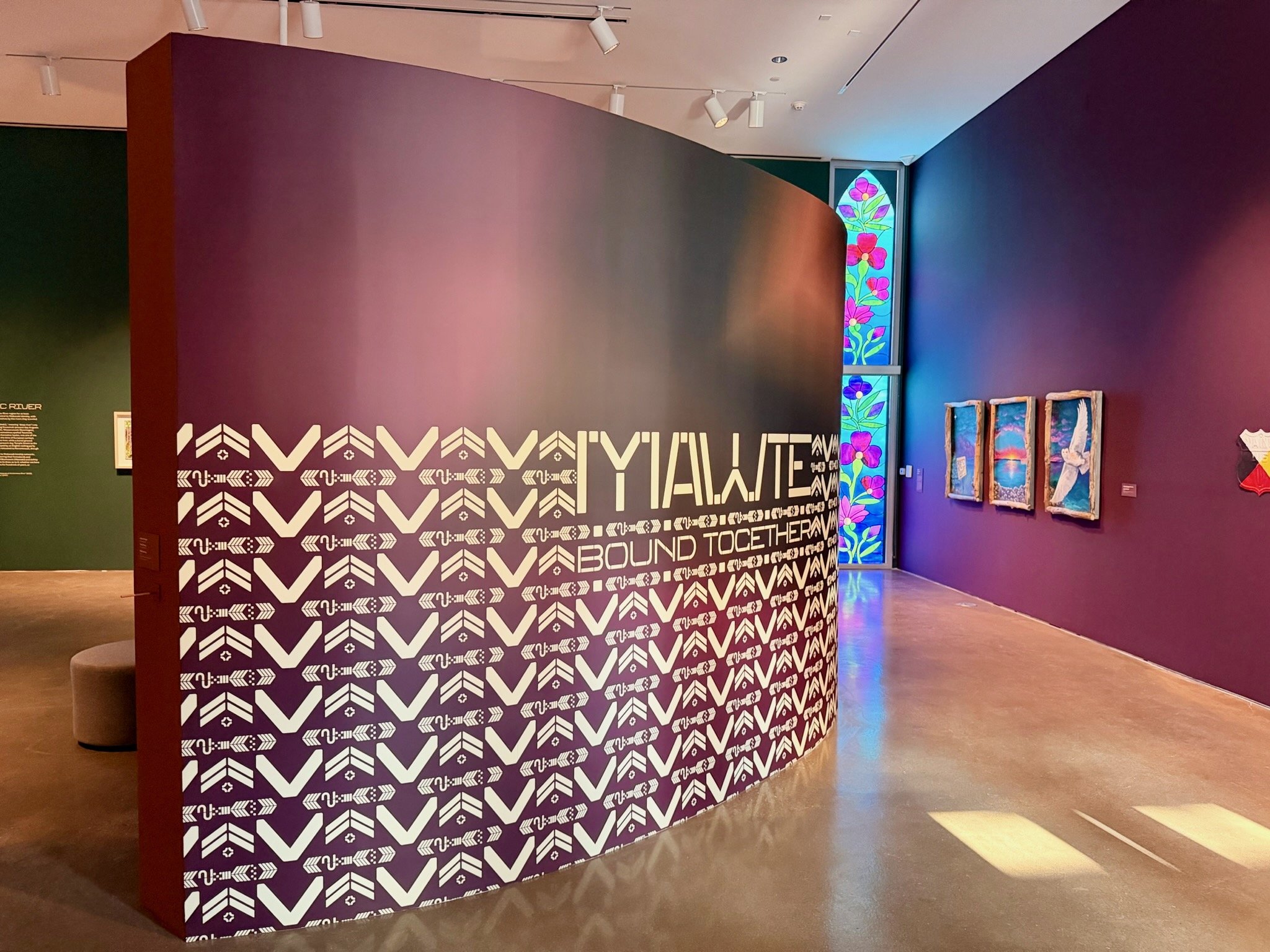
Mαwte: Bound Together
Mαwte: Bound Together connects contemporary Wabanaki artists in an exhibition initiated by guest curator and Penobscot basketmaker Sarah Sockbeson. The Penobscot word mαwte (mαw tteh) means “it is together.” Ideas of togetherness and interconnection guide both the artworks themselves and the curatorial process.
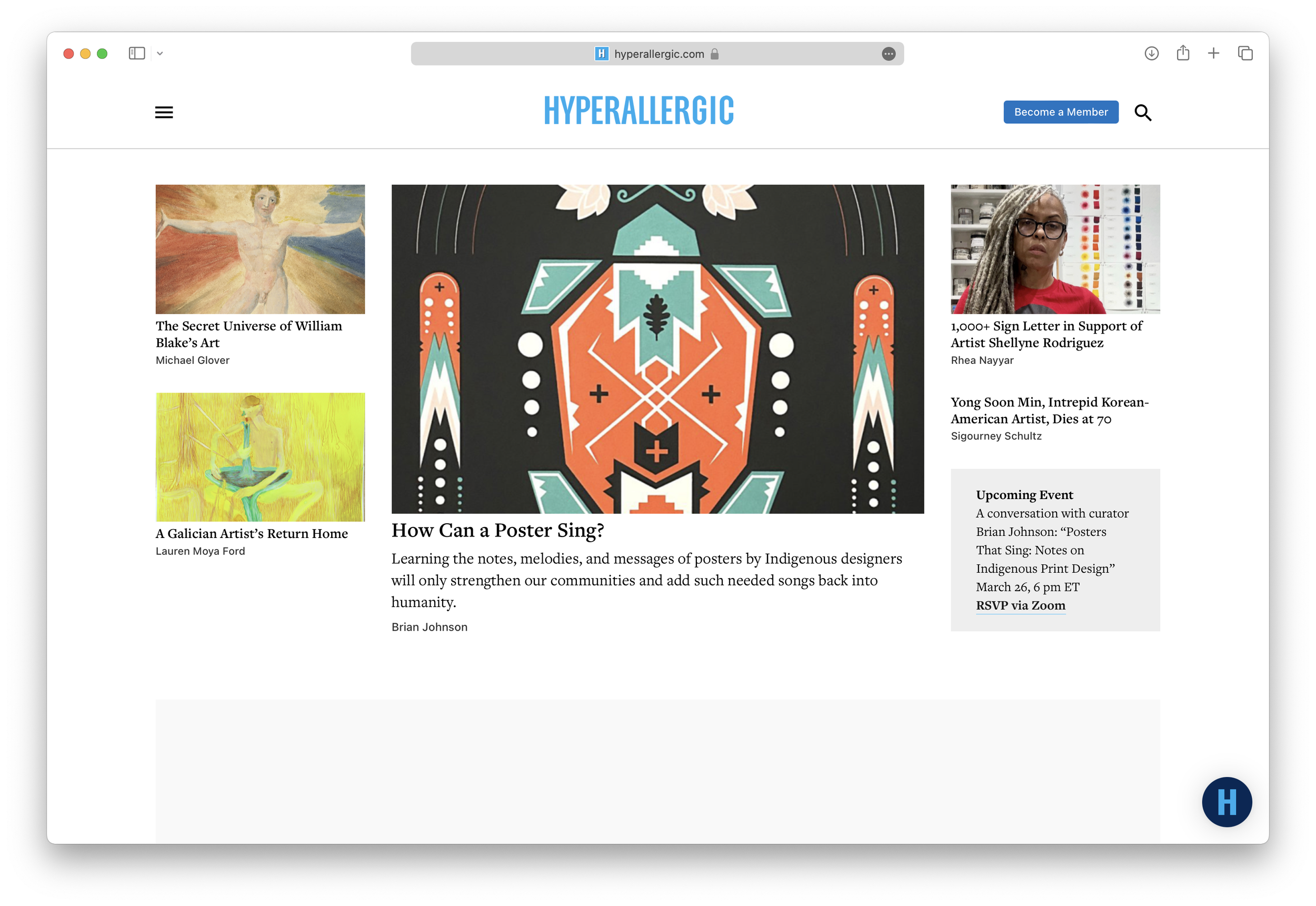
Hyperallergic - Emily Hall Tremaine Journalism Fellowship for Curators
Curatorial Project – Posters That Sing: Notes on Indigenous Print Design
Indigenous representation in poster history currently focuses on depictions and caricatures of Native culture that are used to brand and market products from baseball to butter, Fords to football; the noble savage is stereotyped, not worthy of sovereignty, culture, language. In opposition to this flattening lens Indigenous designers, fabricators, and printers have persevered — creating a legacy of vibrant, distinct, and exciting imagery that counters and subverts the dominant, colonial myth-narrative.